









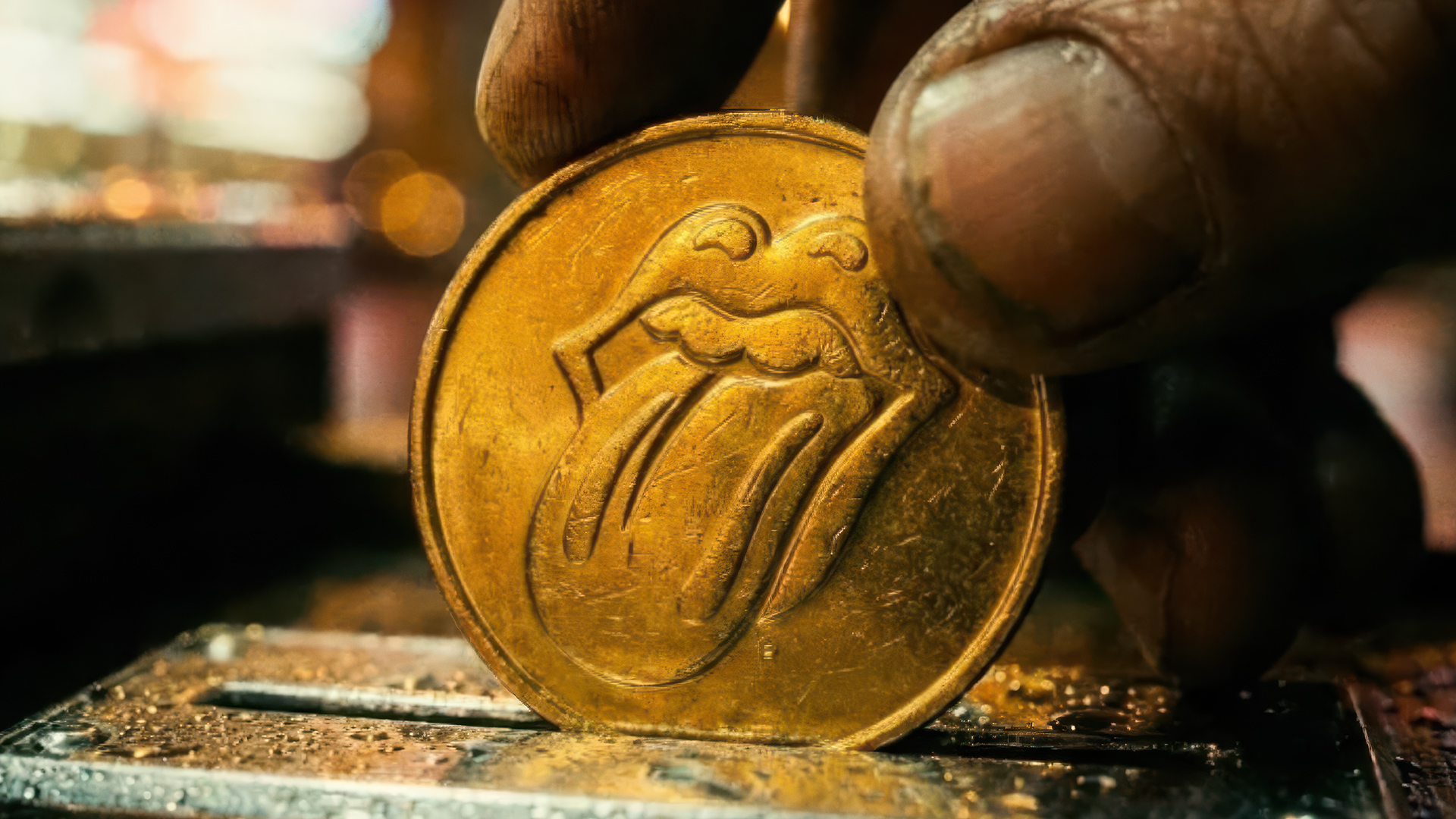
When recording artist Fatboy Slim released Satisfaction Skank, it marked the end of a project that had existed unofficially for decades. The mash-up blends elements of Rockefeller Skank with (I Can’t Get No) Satisfaction, a remix long used in live DJ sets but never approved for release. After nearly 25 years, The Rolling Stones formally sanctioned the track, allowing Norman Cook to remake it using original stems from their 1965 hit.
That approval made the release notable. It also opened the door to a music video that could not have existed before. Directed by Tom Furse, Satisfaction Skank pairs the newly sanctioned remix with visuals built from permissioned archive imagery. Using a generative workflow, Furse repurposed original images and likenesses into new performances, creating a visual companion that feels like a natural extension of remix culture rather than a provocation.
From Sampling to Synthesis
For Fatboy Slim, the conceptual leap was small. Sampling, recombination, and reinterpretation have always been central to his work. Generative tools simply introduce a new medium for a familiar idea.
For The Rolling Stones, the project was rarer still. Their archive is among the most recognizable in modern music, and new visual material featuring the band is almost unheard of. Satisfaction Skank offered a way to create imagery that never existed, but plausibly could have, without disturbing the cultural weight of the originals.
Consent was foundational. The band and Cook approved the use of likenesses and archival material, framing the project as a creative collaboration grounded in trust rather than novelty.
Building a Multi-Character AI Workflow
Satisfaction Skank presented a technical challenge beyond anything Furse had tackled before. Earlier projects often centered on a single recurring character. This video required five distinct, recognizable figures appearing across multiple scenarios without visual drift.
The workflow relied on permissioned archive imagery combined with modern image-editing models like Google's Nano Bannana. Characters were re-dressed, repositioned, and re-contextualized, with carefully constructed start and end frames to prevent facial instability and identity collapse.
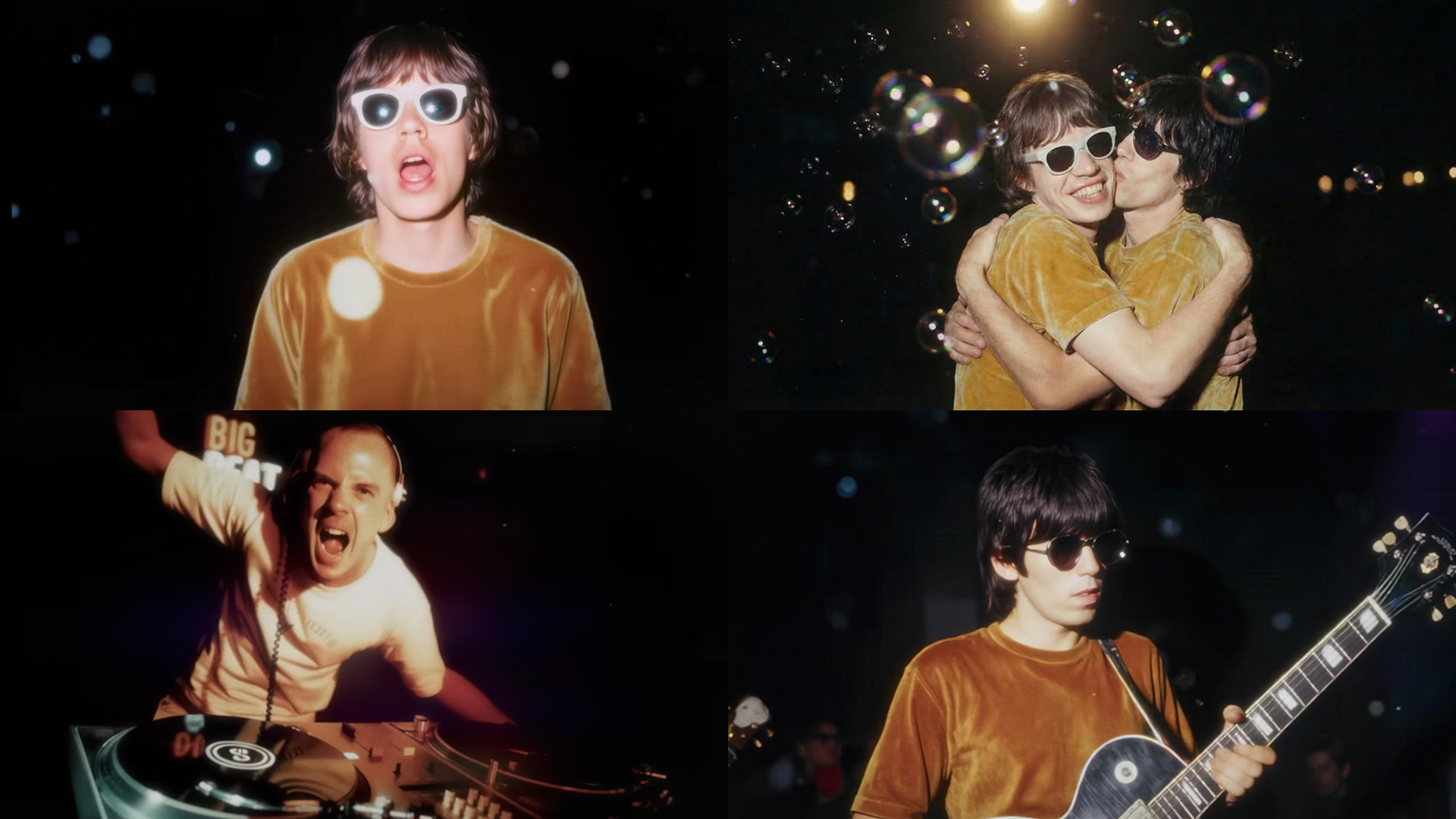
“This project was a dream come true. Working with two artists I loved and had listened to all my life, and getting to make a video for a mash-up of two of their biggest songs, is hardly an everyday occurrence.”
Finishing the Image
Nearly every frame in Satisfaction Skank was processed through Topaz Video as part of the finishing process. Early generative outputs often arrived at low resolution or with inconsistent temporal detail, so upscaling, refinement, and frame interpolation were used to bring the imagery to a releasable standard. This finishing approach reflects a visual language Furse has developed across earlier music videos such as Purple Jelly Disc and Baby, We’re Ascending, where AI-driven imagery, choreography, and collage began to converge into a more cohesive directing style.
“I’d recommend Topaz Video as an essential post-production tool to anyone working with video. It’s the Swiss Army knife of video restoration and enhancement.”
Furse favors the Proteus model for its natural softness, preserving character while improving clarity. On more challenging shots, the Starlight model run in Astra helped recover facial detail and stabilize motion without altering the underlying performance. The goal was never to make the footage look synthetic or over-processed, but simply believable.
A Changing Creative Landscape
Satisfaction Skank reflects a shift already underway. Legacy artists are beginning to adopt generative tools selectively, with intent and agreed boundaries.
For Tom Furse, AI is simply another part of the post-production process. Using Topaz Video to refine, stabilize, and finish the imagery helped turn experimental material into a polished, broadcast-ready piece, keeping the focus on the music and the idea rather than the technology behind it.
Listen to Satisfaction Skank on your favorite music streaming platform!


