





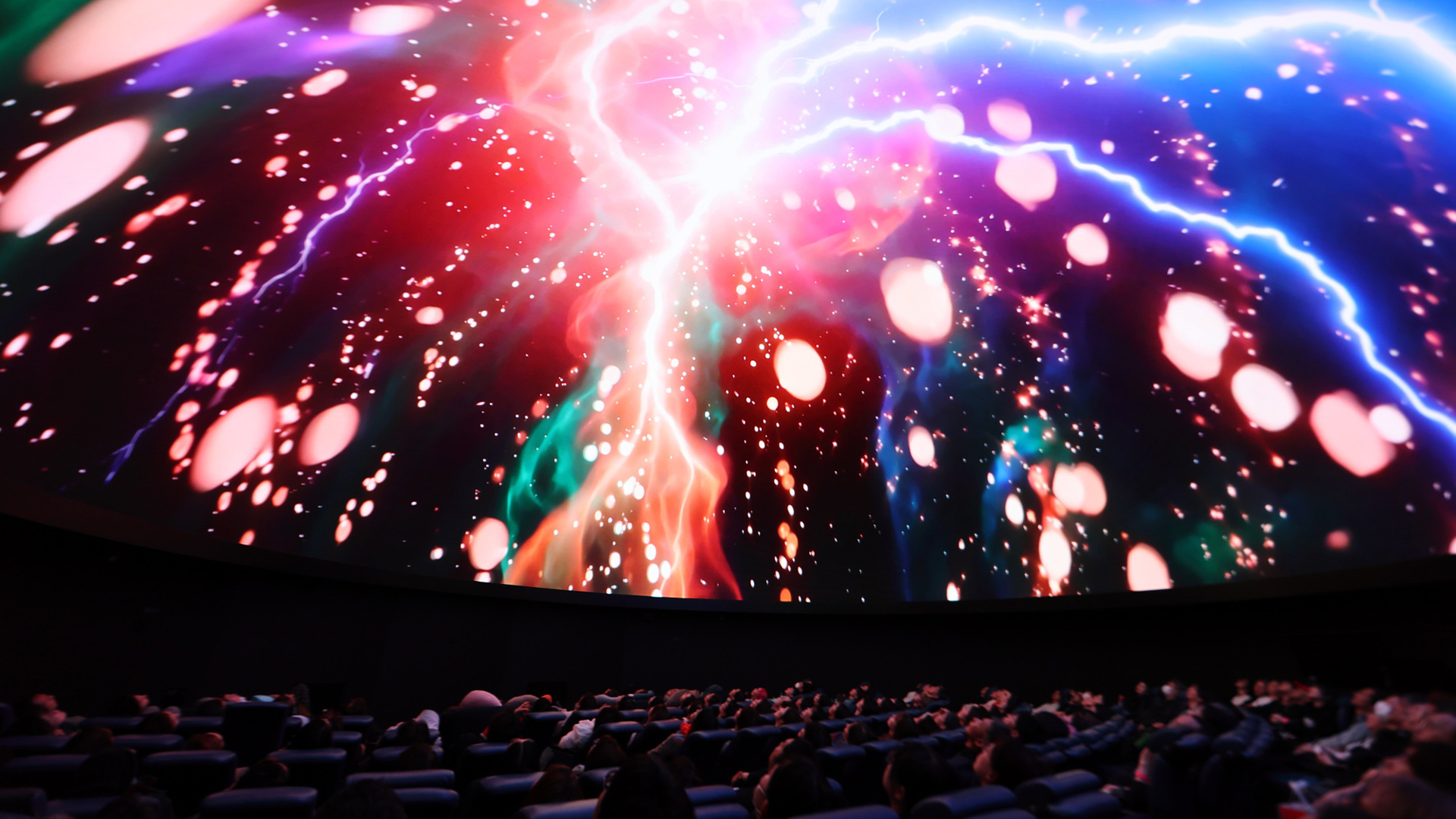
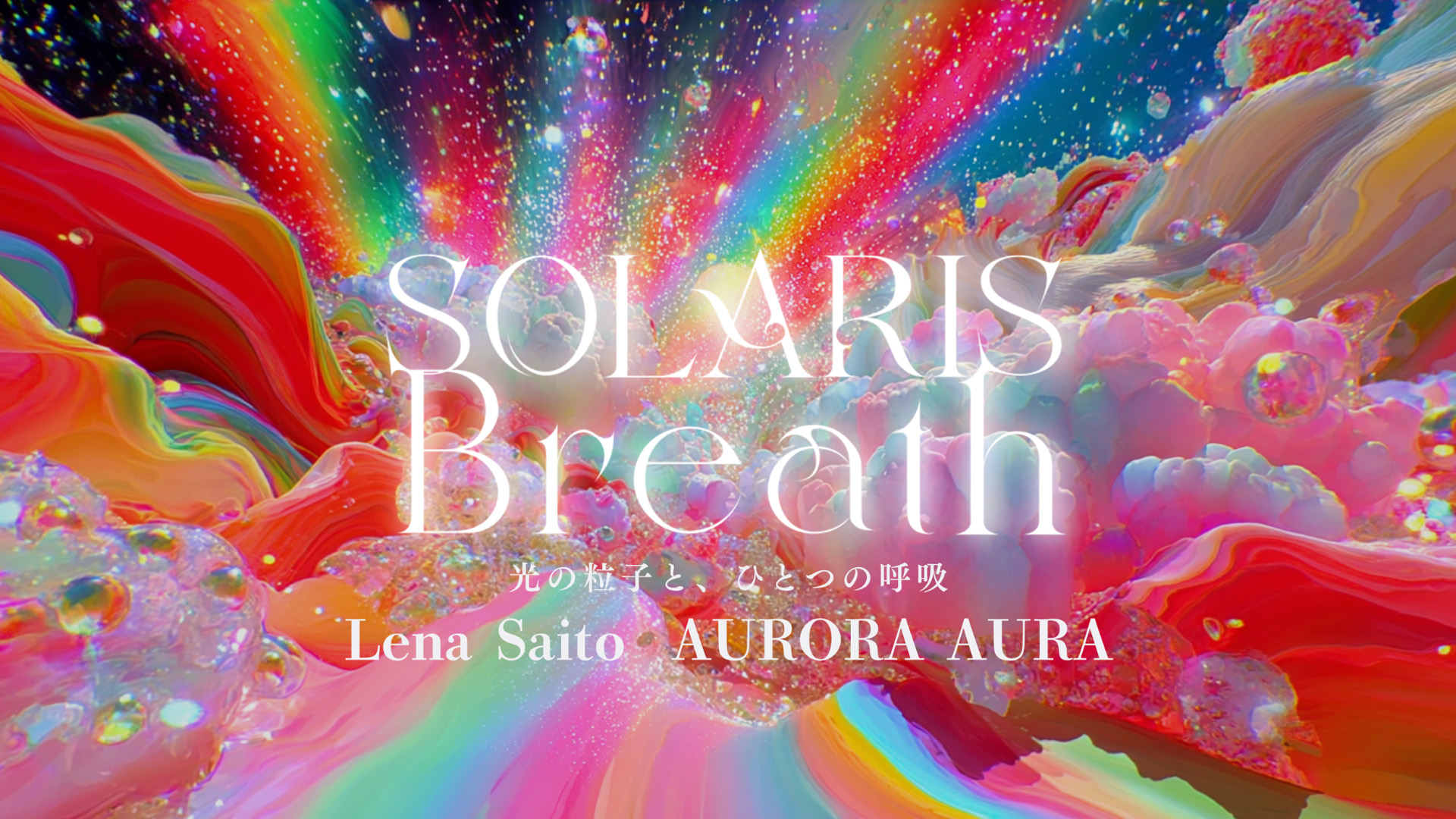
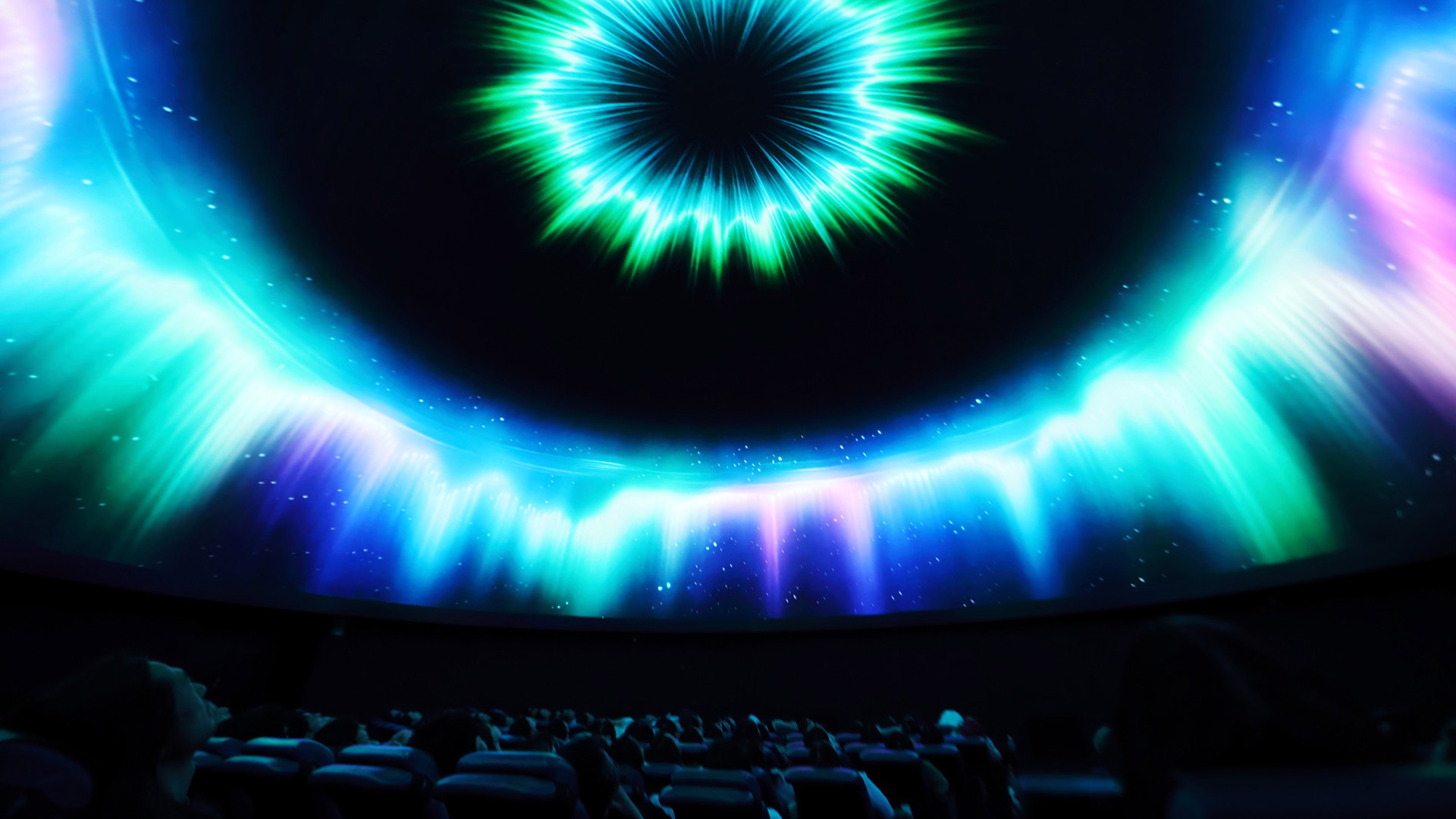
Japanese filmmaker Aurora Aura transformed the Konica Minolta Planetaria in Yokohama into a meditative environment where original sound and AI-generated visuals came together in a 42-minute fulldome experience. Her work, Solaris Breath, also marked Japan’s first presentation of a long-form planetarium work with fully AI-generated visuals.
To make the generated imagery hold up at scale, Aurora Aura used multiple image and video tools from Topaz Labs to upscale, enhance, and finish the work for large-scale dome projection.
Can you tell us about yourself and Solaris Breath? What was the goal of the project?
I'm an artist, AI filmmaker and director based in Japan. My background is in graphic design, illustration, installation art and VR, and today my work focuses on turning AI-generated imagery into immersive spatial experiences.
With Solaris Breath, I wanted viewers to enter through image and sound and travel through their own inner cosmos. A dome fills your entire field of view, so the goal wasn't simply to watch the imagery, but to feel surrounded by it.
What makes producing AI video for a 15-meter dome particularly challenging?
The biggest difference is that there's no frame. The image extends overhead and around you, so you have to think differently about camera movement, where to lead the eye, and how imagery behaves across the dome.
Resolution was the biggest technical challenge. AI-generated video can look fine on a monitor, but on a 15-meter LED dome, softness, noise and missing detail become immediately visible. The roughness itself can break the immersion.
What did your production and finishing workflow look like?
I used Midjourney and Nano Banana Pro for stills, and tools including Grok Imagine, PixVerse, Vidu and Seedance for video. On some shots I upscaled the source image in Topaz Gigapixel before running the image-to-video process to add sharper details. Adobe Premiere Pro and After Effects were used for post-production, and to visualize, I previewed the work in VR on a Meta Quest 3 before seeing it on the actual dome.
Most generated footage started around 720p to 1080p, so I built the Topaz upscale in stages. I used Starlight Precise 2.5 or Astra 2 to upscale to 4k, dialing the sharpness and creativity levels up or down depending on the shot. After additional adjustments in Adobe Premiere and After Effects, I used Proteus in Topaz Video for the final 4096x4096 master.

What did Topaz enable that would otherwise have been difficult?
The biggest thing was fine detail at large scale, which is one of the weak points of AI-generated video. The creative upscaling features in the Astra 2 model doesn't just reduce softness and noise, it adds convincing detail that becomes increasingly important as the image gets larger.
Generative AI gets you to ‘made’ astonishingly fast, but making it hold up as an experience on a big screen takes a finishing stage that locks in real detail at the end. Once that finishing pipeline is in place, you can commit to large-scale, AI-driven work with real confidence.
For Aurora Aura, Topaz provides that final finishing step. Its two-stage upscaling workflow gave her the confidence to take on Solaris Breath and continues to be part of her immersive work today.
“That’s why I’d point any artist working at a large scale toward Topaz. It’s what lets you get everything out of the speed and freedom AI generation gives you.”
Click here to learn more about Aurora Aura's work.


